This blog will be a great way to document a prairie reconstruction project that is taking place at Valley High School in West Des Moines, IA. The goal for this blog will be for students and teachers to leave documentation of the work they have completed over the semester, as well as to see and read about the work done by past students and teachers.
Friday, September 10, 2010
Prairie Plant Identification
Phase 2 Seed List Planted Spring 2009
Agastache foeniculum Anise Hyssop
Anemone canadensis Canada Anemone
Artemisia ludoviciana Prairie Sage
Asclepias incarnata Swamp Milkweed
Aster laevis Smooth Blue Aster
Aster novae-angliae New Englad Aster
Aster ptarmicoides Upland White Aster
Astragalus canadensis Canada Milkvetch
Baptisia leucantha White Wild Indigo
Boltonia asteroides False Aster
Cassia fasciculata Partridge Pea
Coreopsis lanceolata Lanceleaf Coreopsis
Coreopsis palmata Prairie Coreopsis
Desmodium canadense Showy Tick Trefoil
Echinacea pallida Pale Purple Coneflower
Echinacea purpurea Purple Coneflower
Eupatorium coelestinum Mist Flower
Eupatorium purpureum Sweet Joe Pye Weed
Heliopsis helianthoides Ox Eye Sunflower
Kuhnia eupatoriodes False Boneset
Liatris aspera Button Blazingstar
Monarda fistulosa Wild Bergamot
Monarda punctata Dotted Mint
Penstemon digitalis Foxglove Beardtongue
Petalostemum candidum White Prairie Clover
Petalostemum purpureum Purple Prairie Clover
Pycnanthemum virginianum Mountain Mint
Ratibida pinnata Yellow Coneflower
Rudbeckia hirta Black-Eyed Susan
Rudbeckia subtomentosa Sweet Black-Eyed Susan
Rudbeckia triloba Brown-Eyed Susan
Silphium lacinatum Compass Plant
Silphium perfoliatum Cup Plant
Solidago ohiensis Ohio Goldenrod
Solidago riddellii Riddell's Goldenrod
Solidago rigida Stiff Goldenrod
Solidago speciosa Showy Goldenrod
Verbena stricta Hoary Vervain
Vernonia fasciculata Ironweed
Zizea aurea Golden Alexanders
Grasses
Andropogon gerardii Big Bluestem
Andropogon scoparium Little Bluestem
Bouteloua curtipendula Sideoats Grama
Elymus canadensis Canada Wild Rye
Sorghastrum nutans Indiangrass
Thursday, May 6, 2010
First Soil Test
Sunday, April 11, 2010
2009 (Fall)
The plant science students were able to continue the collaboration with Polk County Conservation by harvesting Virginia Wild Rye (Elymus virginicus) seed out at Chichaqua Bottoms Greenbelt. The students also helped remove some tree species.
By the fall, the first phase of the prairie reconstruction showcased the asters (Aster laevis, Aster novae-angliae), goldenrod (Solidago rigida), and early sunflower (Heliopsis helianthoides). Eleven species of forbs were seen to bloom by the end of its second year.
Saturday, April 10, 2010
2009 (Spring)
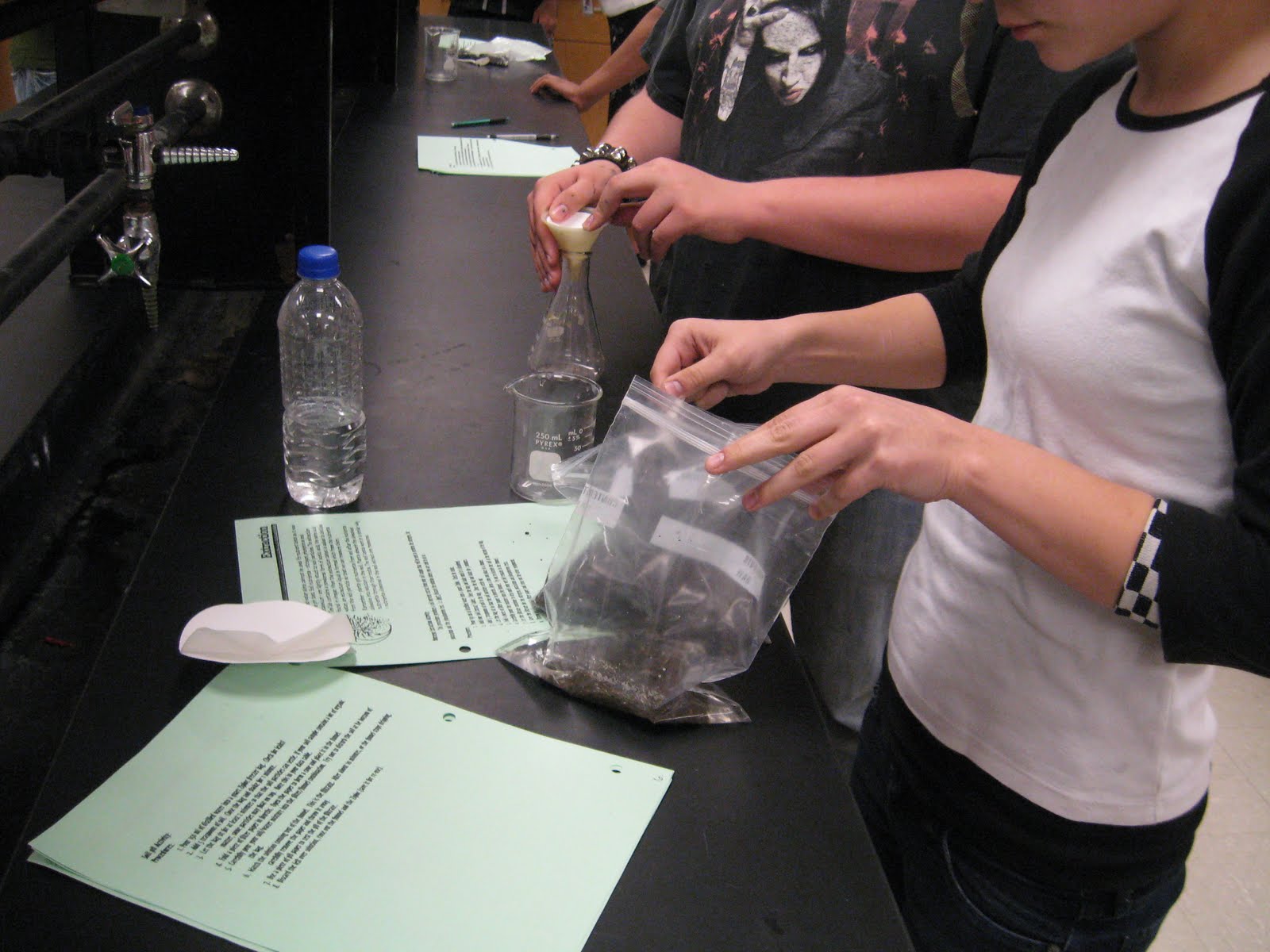
The students enrolled in plant science conducted germination experiments on several species of native seeds. They monitored the growth of the plants in the greenhouse and transplanted the successes out into the reconstructed prairie. Other projects for the semester included native plant identification in the prairie as well as invasive species removal.
Due to the fundraising conducted by the environmental club, a whole acre was prepared and the seed was hand broadcast by the 80 some students. Cover seed that was harvested the previous fall was also added to the mixture to ensure some early blooming in the new plot. The cover seed included black-eyed susan (Rudbeckia hirta), partridge pea (Cassia fasciculata), yellow headed coneflower (Ratibida pinnata) and the ox-eye sunflower (Heliopsis helianthoides).
Wednesday, April 7, 2010
2008 (Fall)
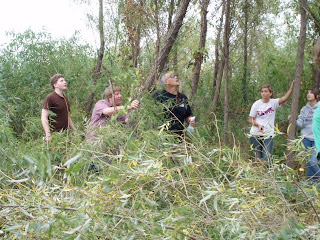
The collaboration continued with Polk County Conservation. The plant science students attended a service learning field trip that gave them the opportunity to identify and remove invasive willow trees and harvest prairie seed that would be used in future prairie plantings of which Polk County Conservation is in charge. Students worked at Engeldinger Marsh, one of the few remaining prairie potholes in Polk County.
2008 (Fall)
Upon the return to school, the Valley High School Environmental Club took on the prairie reconstruction as their senior project. They began by eliciting help from community organizations for donations that would cover the seed cost. That fall they received monetary donations from Mid-American Energy, Iowa Network Services, and the student council. The money they raised was enough to cover the remaining cost to prepare and seed the entire site.
The plant science students continued to work in the prairie by removing noxious weeds and identifying the plants that had leafed out or were in bloom. They also harvested seed from the black-eyed susan (Rudbeckia hirta), partridge pea (Cassia fasciculata), and the ox-eye sunflower (Heliopsis helianthoides).
.jpg)